How a GCHQ Intelligence Officer proposed using our top secret messaging service
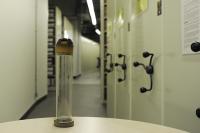
The pneumatic tube system – known as Lamson tubes – was used at our former offices in Oakley, Cheltenham, to send top secret documents up to 400 yards away in a matter of seconds, saving staff up to a 10-minute walk at a time. The system was in use until the late 1980s.
But one intelligence officer in the 1950s, who had met his future wife at GCHQ, found a different use for the network of tubes spanning the different buildings across the site.
The former RAF serviceman, who joined GCHQ as a linguist, struggled to pluck up the courage to ask her to marry him in person. Instead he wrote a letter to his future wife, who worked in the same building as an analyst on the Soviet air force.
Rather than reply using the Lamson tube, she walked round to his office and accepted the proposal in person. The pair were happily married for more than 30 years.
GCHQ historian Tony Comer said:
“We’ve always prided ourselves on our ability to think outside the box.
“He was the shy and retiring type and never quite found the right moment to ask her face to face. So he drew on the GCHQ tradition of finding ingenious solutions to the toughest of problems to pop the question.
“They married, and lived happily ever after, and all thanks to the aid of a Lamson tube!”
Lamson tubes were used by GCHQ throughout Second World War, including at Bletchley Park, and the Cold War until the late 1980s. Notes would be rolled up into the Lamson carrier, sent in the tube with directional instruction to the exchange room, and then sent on their way to the relevant room known as “tube stations”.
While the tube network was largely used to send top secret documents, it is said chocolate eclairs were sometimes piped down the network due to their convenient shape.