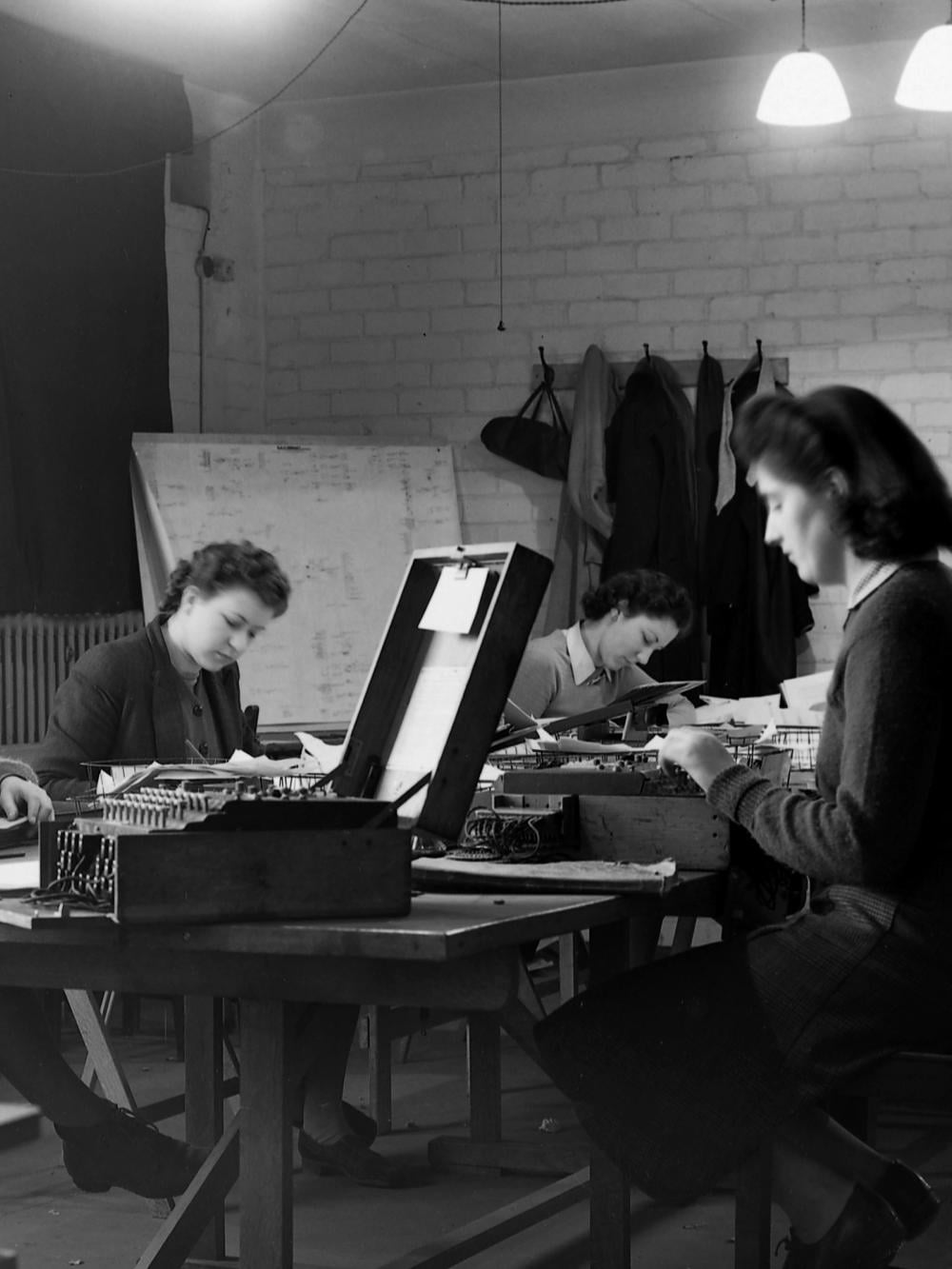
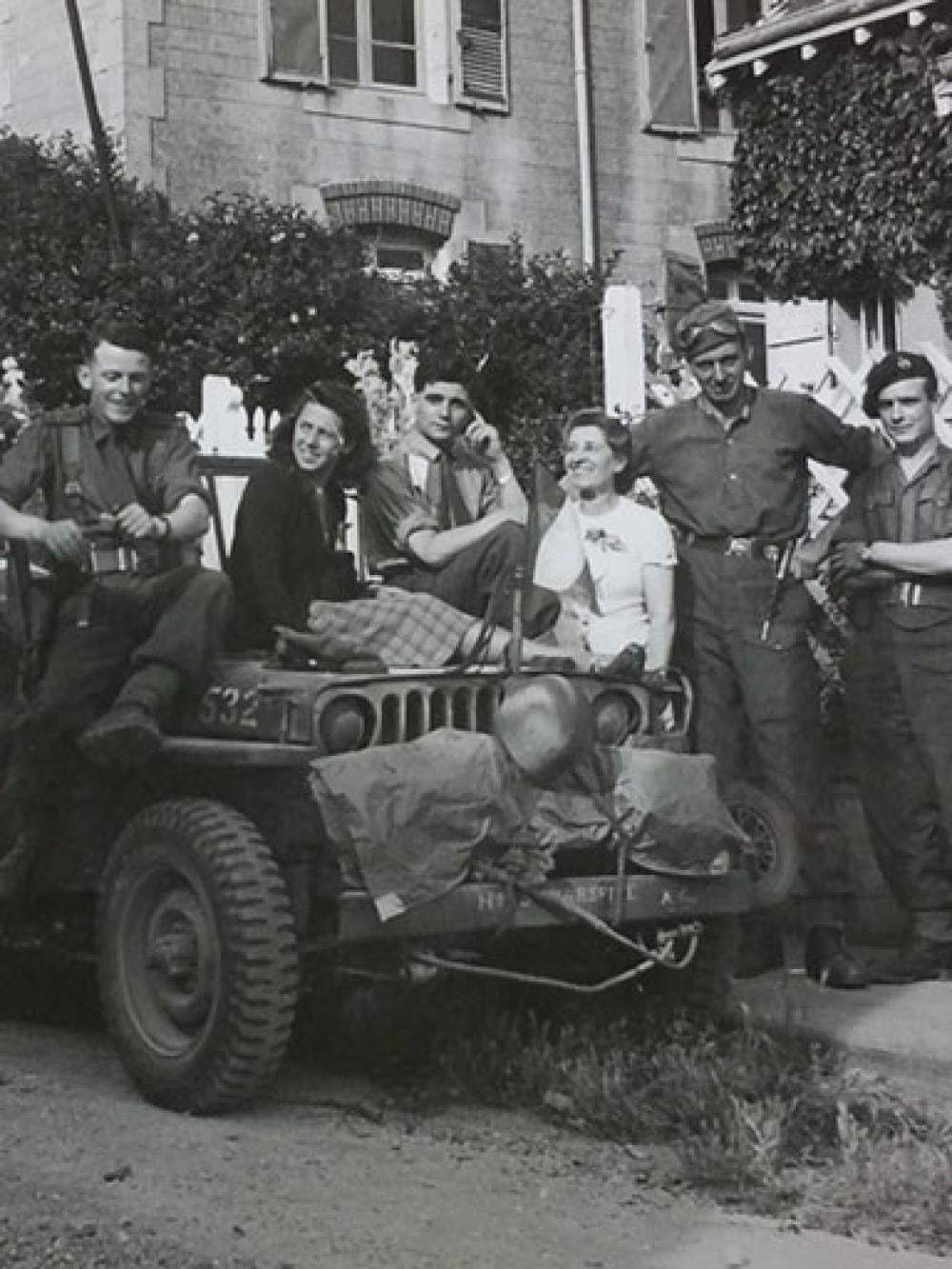
GCHQ releases messages between spies revealing the end of the Second World War
GCHQ has today released letters sent between intelligence operatives sharing the news that the end of the Second World War in Europe was imminent. The letters, which were sent in the run-up to the end of the fighting, have been released to mark the 80th anniversary of VE Day on 8 May 2025.
The release features two letters from the intelligence agency’s archives. The first of which contains instructions from Eisenhower relaying that the German high command had signed an “unconditional surrender”. The document also contains light-hearted additions from the intelligence operative who had transcribed the message, telling the recipient, “’ERE IT COMES...,” and instructing the reader to “...JOLLY WELL...” read the letter in full.

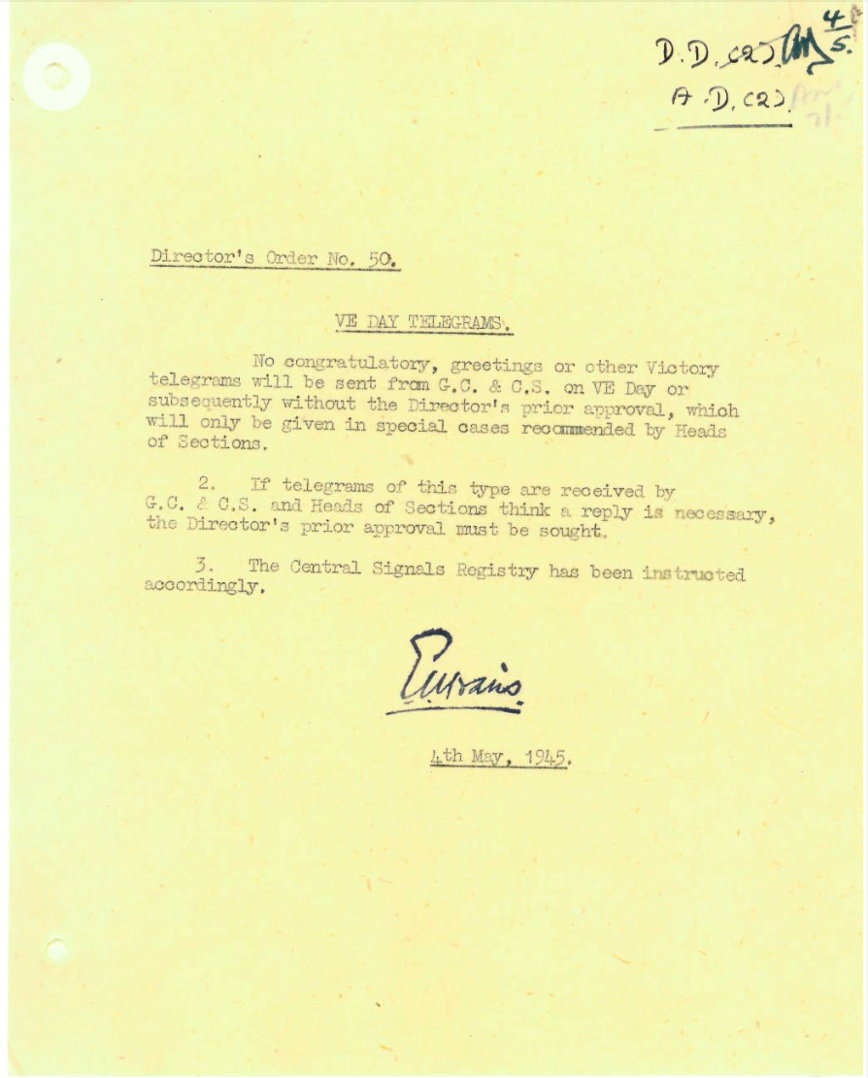
The second document (below) shows a letter from then GCHQ Director Sir Edward Travis to the organisation about impending Victory in Europe Day. Crucially, the letter is dated 4th May 1945, showing that those working in the intelligence agency were some of the first to know that the end of the war was about to be announced.
The documents, released today from the GCHQ archives to mark the 80th anniversary of VE Day, reveal both our role in the intricate sequencing of VE Day and also the palpable excitement felt by those in the organisation tasked with sharing messages relaying that the fighting in Europe was about to end.
The first of the two newly released documents is a letter from Dwight D. Eisenhower, then Supreme Commander of the Allied Expeditionary Force in Europe, to Deputy Director Naval Section via the admiralty relaying that the German high command had signed an “unconditional surrender”.
The document, timestamped 8:30am 7th May 1945, instructs allied expeditionary forces to “cease all offensive operations” but states that troops should remain in present position, adding, “Due to difficulties of communication there may be some delay in similar orders reaching enemy troops so full defensive precautions would be taken.” The bottom of the document includes the instruction that “NO REPEAT NO RELEASE” is to be made to the press.
The document also features annotations by the officer who had transcribed the message. At the top, the officer has added, “’ERE IT COMES U GOILS”, (likely to be a light-hearted term for girls), while the bottom of the letter includes a note which reads, “AND U CAN JOLLY WELL RD TT PLSE” (likely ‘... read ‘top-to-toe' please’).
The additions show the excitement felt by the operator who had the privilege of passing on the news that the end of the fighting was due in a matter of hours. These operators were charged with holding vital top secret information and as a result of working under such crucial secrecy their voices rarely feature in historical accounts. This document gives us an insight into the mindset of individuals who had been carrying out their work in secret for years.
Anne Keast-Butler, Director GCHQ, said:
“We know that intelligence had a significant part to play in VE Day and bringing WW2 to a close, and I’m proud that our predecessors at GCHQ were part of that.”
“It is also a powerful reminder of how those who worked so diligently and selflessly in the past paved the way for our future, and the world we live in today. It is with great pride that we pay homage to them today.”
The second document to be released shows a letter written and signed by then GC&CS (GCHQ) Director Sir Edward Travis to staff at the organisation, stating that “no congratulatory, greetings or other Victory telegrams will be sent from GC&CS on VE Day or subsequently without the Director’s prior approval.”
Crucially, the letter is dated 4th May 1945, four days before VE Day. Showing that intelligence heads, and the staff working at GCHQ, were some of the first to know that the end of the war was about to be announced and highlights the role the agency had as insiders to the sequencing of the German surrender.