The Palestine Mandate
Historical context
Britain conquered Palestine from the Ottoman Empire during 1917-18. Following the Great War, British rule in Palestine was administered under a League of Nations ‘Mandate’ until 1948. Unlike other colonies, this Mandate aimed to lead the native population to self-government and independence. In Palestine, Britain was also committed to establishing a ‘Jewish national home’ by facilitating Jewish immigration and colonisation of Palestine. For decades, Britain sought, and even tried to force a compromise between Arabs, who feared displacement, and Jews, who wanted a safe haven from persecution. Britain also sought to protect its economic and political interests in this vital part of the Middle East. Communications Intelligence (COMINT) provided by GCHQ between 1944 and 1948 was to provide one of the main sources of intelligence for the British government and help shape Britain’s policy in the region.
British support for a ‘Jewish national home’ in Palestine originated in the Balfour Declaration of 1917 which promised to protect the civic and religious rights of Palestinians, but not their political rights. Fearing displacement in their own country, Palestinians resisted British policy through non-violent diplomatic means, such as boycott and civil disobedience, and in 1936, by force of arms. Palestinians sought to stem mass Jewish immigration to the region, which peaked as a result of persecution in Germany and Poland. The Palestinian leadership organised under the ‘Arab Higher Committee’ launched a General Strike in 1936, which escalated toward revolt. By September 1936, two divisions of the British Army were deployed to restore order.
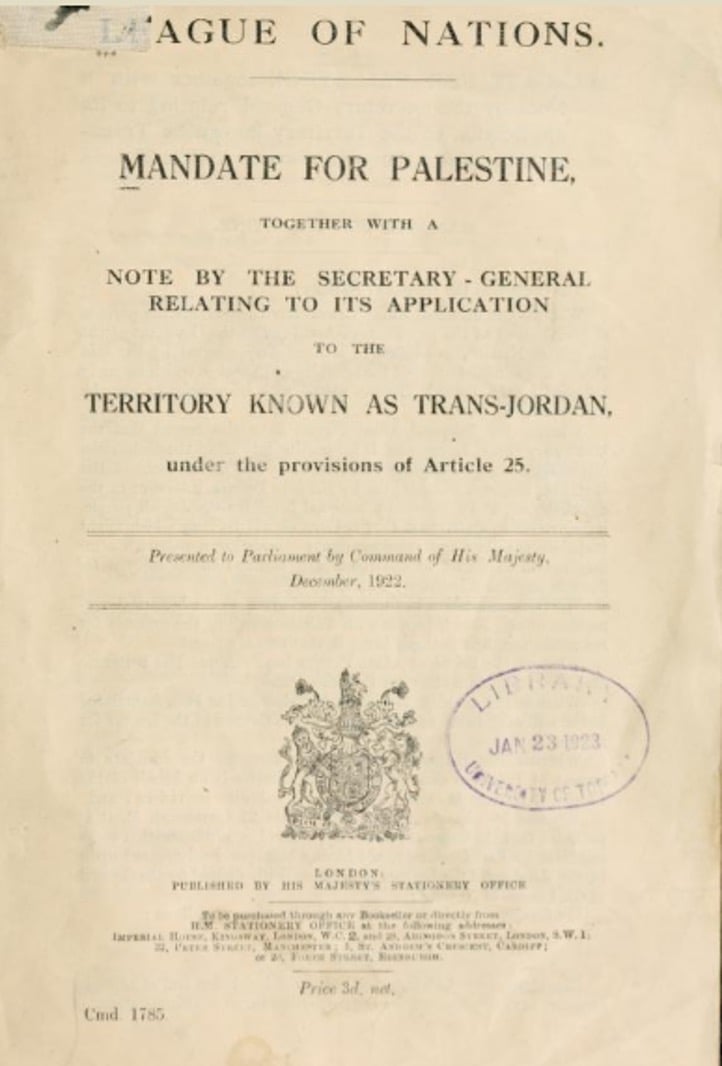
The Palestine Mandate from the League of Nations from 1922
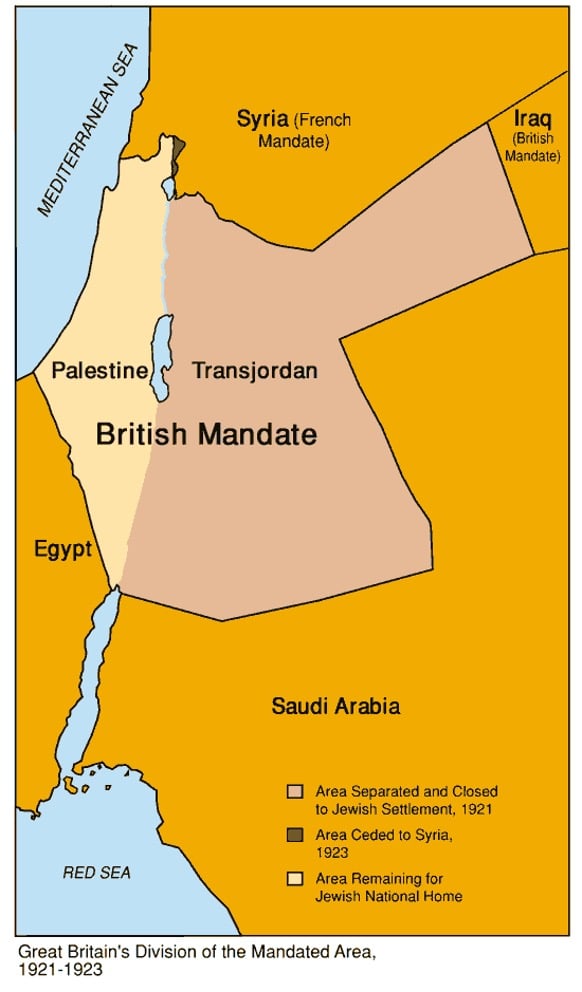
(source - www.jewishvirtuallibrary.org)
In 1937 the Grand Mufti of Jerusalem, Amin al-Husayni, the leading Arab politician in Palestine, relaunched the Arab revolt against Britain and aligned himself with Germany during the war. As this developed, Britain sought to augment the Yishuv (the Jewish population of Palestine) which had its own large army, the Haganah, which had over 3000 permanent and 16000 temporary personnel at its peak. There had been a ceasefire between both sides from 1940-1944. The Haganah had developed its own signals service in the early 1930s to coordinate the defence of outlying settlements.
Second World War
By 1939, anticipating another war in Europe, Britain looked to end the disturbances in Palestine and win over the support of independent Arab states. To meet these aims, it announced in a White Paper in May 1939 that the ‘Jewish national home’ had been fulfilled, that Jewish immigration to Palestine would be restricted to 75,000 over the following five years, whence it planned to establish Palestinian self-government, and full independence by 1949. The Jewish community of Palestine resisted these restrictions until the fall of France, when both sides found themselves in a life-or-death struggle with Germany.
During the Second World War, a small section of the Radio Security Service (RSS) known as Middle East Radio Security (MERS) operated from the Sidi Bishr camp outside Alexandria were responsible for monitoring the radio networks of the Haganah, Lehi and Irgun. They continued this activity after the war until the unit closed on 21 June 1946 and was relocated to Cyprus.
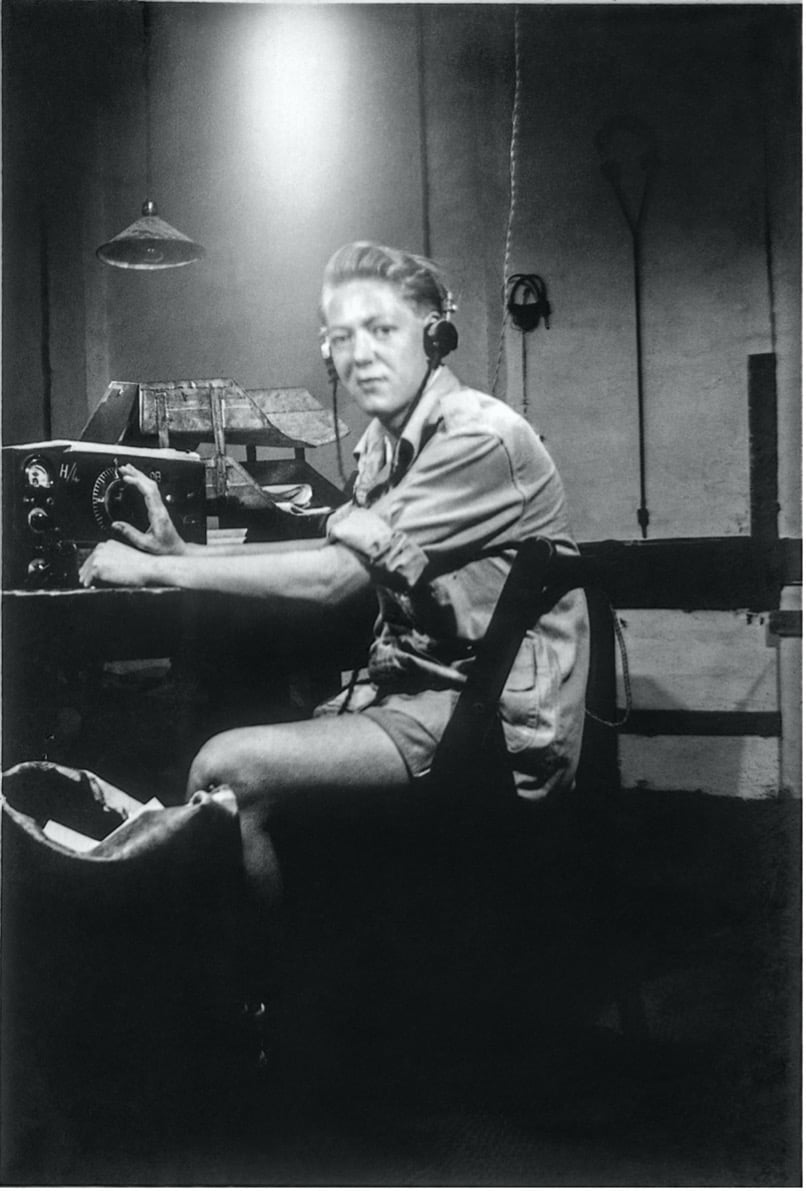
Radio Security Service (RSS) operator at Sidi Bishr camp near Alexandria (c/o Ray Wright)
Anticipating a potential German invasion of Palestine, Britain trained the Palmach (the strike force of the Haganah) and developed its wireless intelligence networks during the war. Haganah’s intelligence arm, the Shai, cooperated closely with British intelligence and the Palestine Police Criminal Investigation Department (CID). Consequently, Shai’s professional capabilities grew during the war as it helped Britain in its struggle against the Nazis and Italians, Jewish terrorists, Arab rebels, fifth columnists, and even communists. Armed with these cutting-edge skills, Haganah SIGINT routinely monitored Coastguard radio networks, helping it to guide ships carrying Jewish immigrants towards the Palestine coastline in violation of immigration restrictions. The Jewish services were also adept at HUMINT gathering.
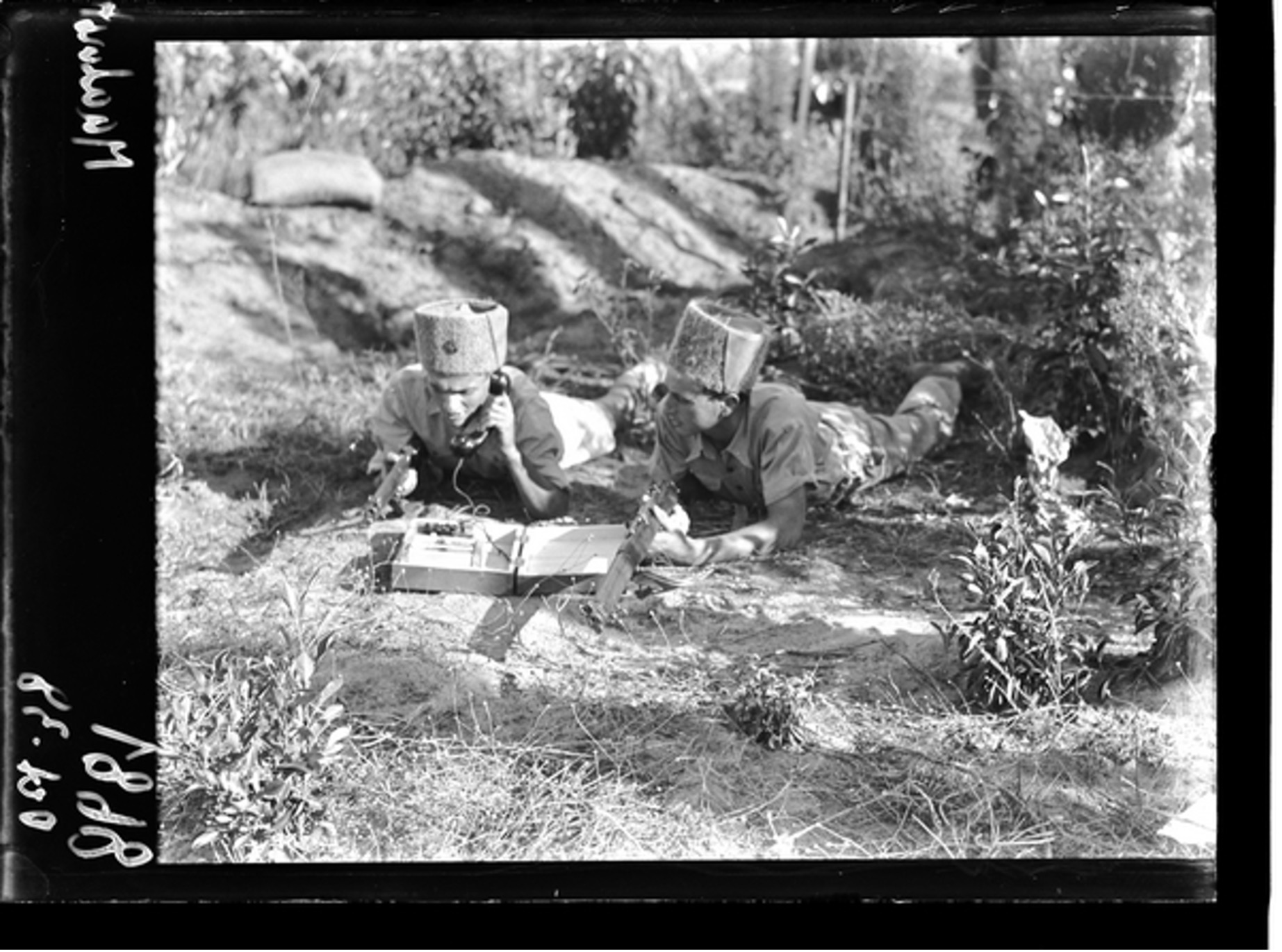
Communications training by members of the Jewish Settlement Police (Ghaffirs/Notarim) speaking on wireless telephone 1938 (source https://www.archives.gov.il/product-page/1501661)
In 1943, the Haganah and Palmach began to resist attempts by the government to disarm. A stalemate ensued until the end of the war, but MI5 began to depend heavily on GCHQ intercepts as it began to study Haganah’s communications, its order of battle, and arms caches. Yet, after years of cooperation during the war, British intelligence’s junior partners in the Shai had become experts in their own right. In February 1945 Alexander Kellar, the MI5 representative in the Middle East, found Jewish intelligence had access to the British military and intelligence services switchboards at the King David Hotel in Jerusalem, the centre of British administration in Palestine.
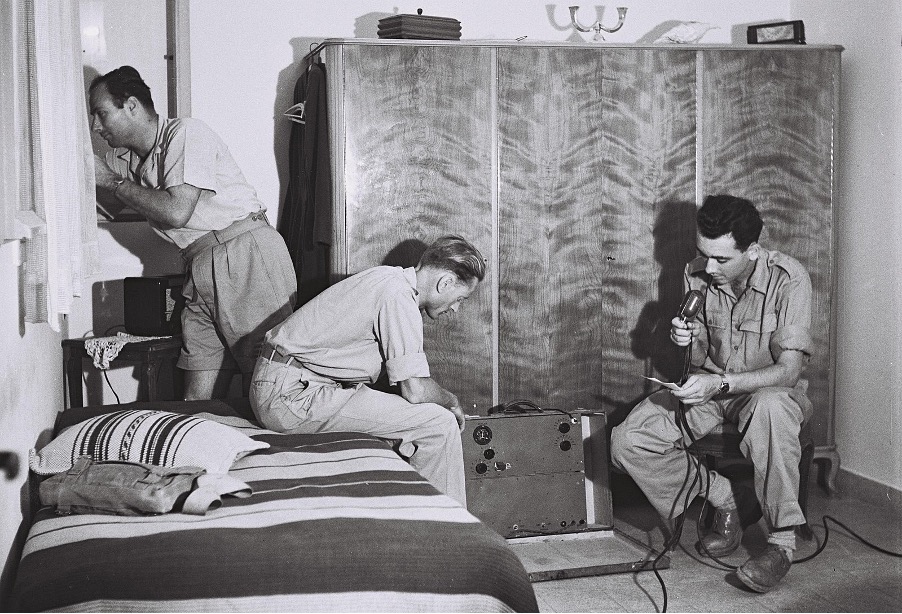
Haganah wireless operators using illegal transmitters
Post-war
After the Second World War and the holocaust had ended, some 600,000 Jewish survivors needed a home but no western state was willing to take them. British authorities misconstrued how their power compared to that of the Yishuv as well as their Arab counterparts. The Yishuv wanted their independence from Britain, a desire fuelled by Zionist propaganda which painted British leaders as anti-semitic. The Yishuv offered sanctuary to the Jewish refugees and displaced persons – as it needed to expand Jewish settlements. Immigration was a critical catalyst for the emerging problems in the region.
The fascistic terrorist organisation Lehi (what Britain referred to as the Stern Gang) regularly assassinated members of the political police force in Palestine. From 1944, the radical Zionist dissident movement Irgun Zva’i Leumi relaunched its armed revolt against Britain after four years of ceasefire. Under the leadership of future Prime Minister Menachem Begin, the Irgun launched a bombing campaign which sought to destroy symbols of British power, bring an end to British rule, and thereby enable the rescue of remnants of European Jewry. Irgun’s campaign escalated. When Britain executed some of the Irgun members, Irgun reciprocated by hanging British soldiers.
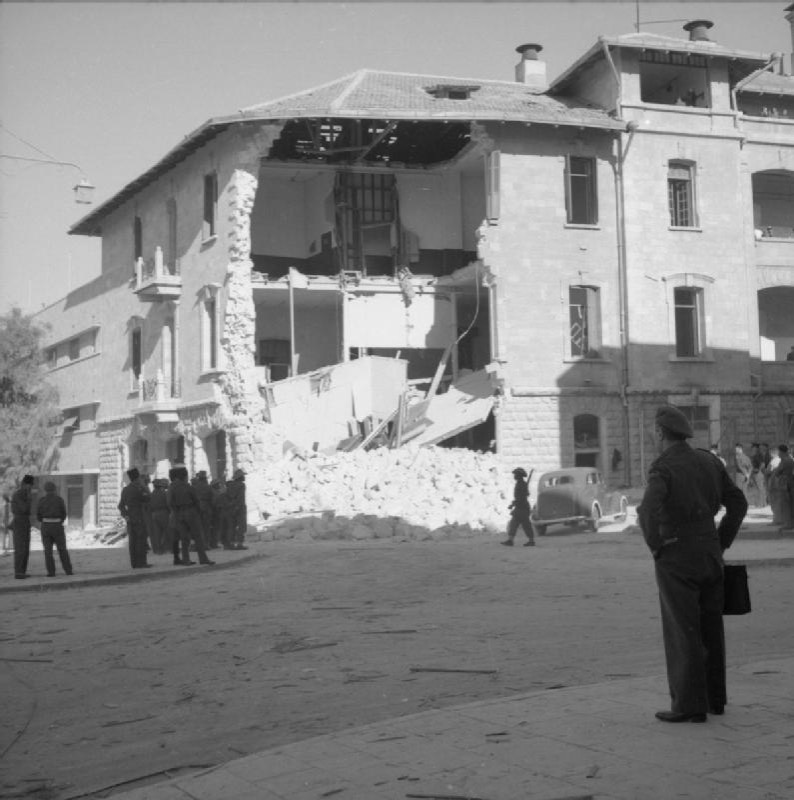
Exterior view of damage done by a terrorist bomb to the Criminal Investigation Department (CID) Headquarters building in Jerusalem 27th December 1945
(©IWM – No.1 Army Film and Photographic Unit)
The diplomatic and commercial sections of the Government Code and Cypher School (GC&CS) at Berkeley Street in London had a team working against Yishuv traffic. Diplomatic intercept would play a key role in understanding Arab and European state policy towards Palestine.
Initially, Haganah cable and radio traffic, referred to as ISPAL (Intelligence Services Palestine) and from 1944 onwards ISOATS, was the main target which provided reporting on military intelligence. Over 50,000 ISPAL/ISOATS messages were produced during this period. ISPAL was handled with a high degree of security as there was a known tendency for intelligence to be leaked to Zionists.
Traffic of the Jewish Agency, the semi-autonomous representative body of the Yishuv (from 1944 onwards known as ISTRIA), was a secondary priority which generated reporting on political and diplomatic activities of the Jewish Agency. Priority messages from Palestine could be turned around within four hours. General Evelyn Barker, General Officer Commanding (GOC) Palestine, was to state, ‘we are entirely dependent for our only absolutely reliable information’ on GCHQ SIGINT.
The main consumer of SIGINT on Palestine was the MI5 regional outpost, known as the Security Intelligence Middle East (SIME), in Cairo. MI5 was meant to coordinate intelligence and disseminate reporting back to the Middle East, but Palestine intercepts had fallen under the custody of the Chief of SIS. By 1944 it was clear that something needed to be done to deal with British security’s dependencies on the Jewish Agency. SIS and Mi5 gradually opened up the ISOATS and ISTRIA reporting directly to representatives in the Middle East, and the High Commissioner in Palestine. There were reservations about sharing this sensitive reporting with the Palestine Police’s Criminal Investigation Department, but this was agreed upon by the summer of 1945.
Jewish codes were attacked by a small unit of around five cryptanalysts and translators at Berkeley Street under the command of Royal Navy Captain Edward Hastings, the then Deputy Director for Diplomatic Intelligence (DD3). When the diplomatic work at Berkeley Street was moved to Eastcote in 1946, this small unit was relocated to Chesterfield Street. Peculiarly, they had a special warrant to intercept and read the traffic of British subjects. Daily phone calls were made by DD3 to the Colonial Office relating OATS messages.
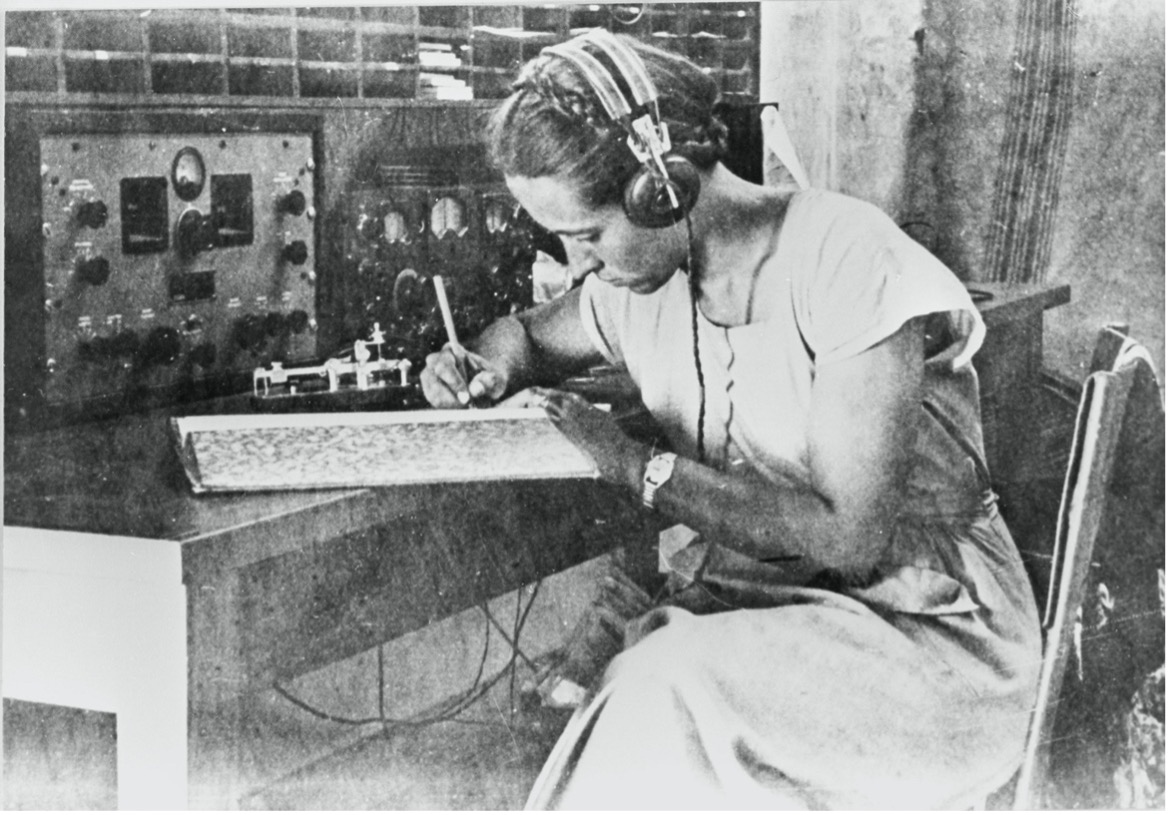
Female Morse operator receiving a transmission
(c/o IDF and Defense Establishment Archives Tel Aviv)
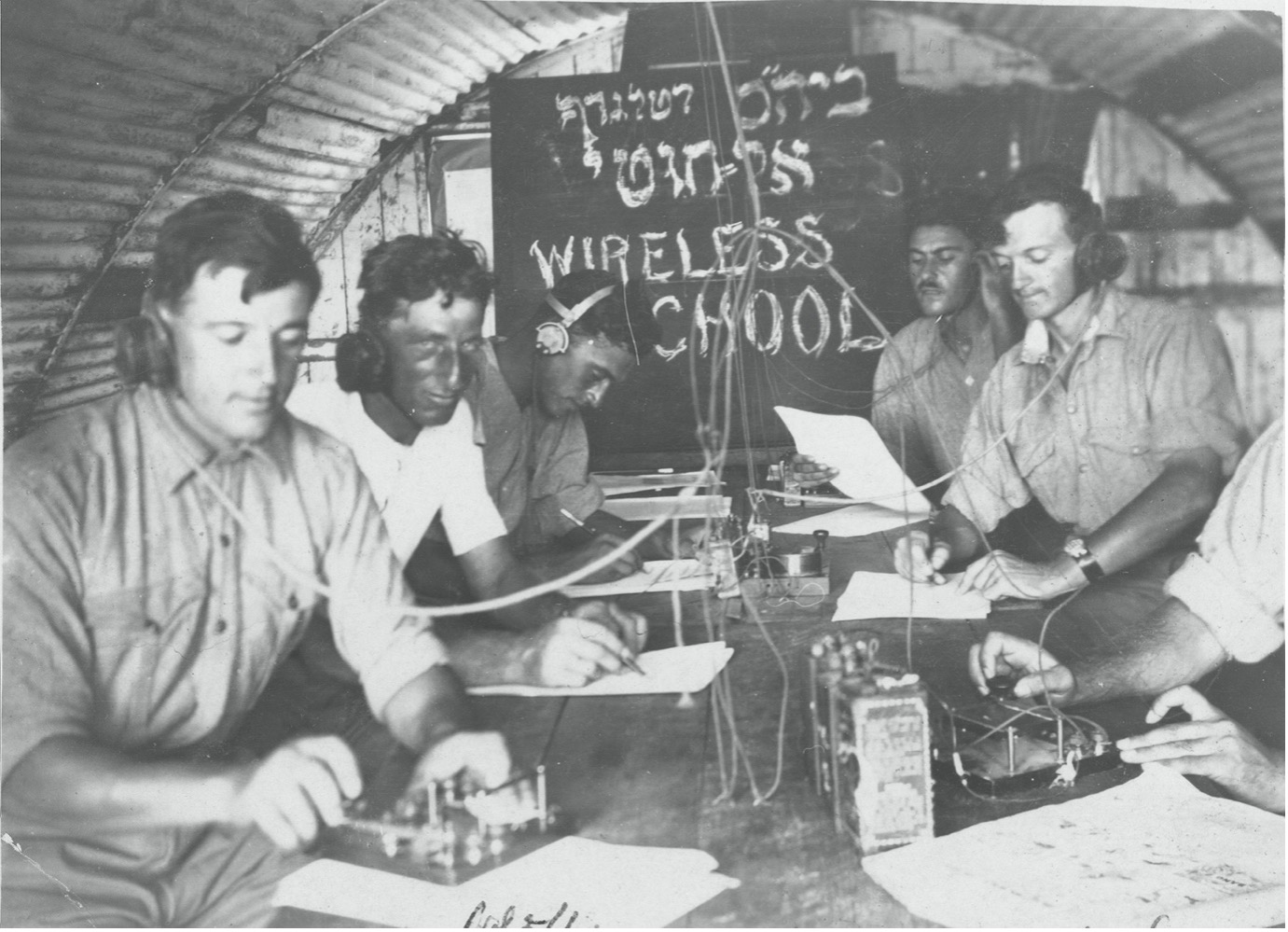
Photograph of Morse training in the telegraph school at Sarafand-al-harb
(c/o IDF and Defense Establishment Archives Tel Aviv. Donated by Mordecai Bakran)
Seeking to stem the Jewish terrorist campaign in Palestine, the British Army closed the Jewish Agency, arrested much of its leadership and some of Haganah’s command, and confiscated tonnes of documents in Operation AGATHA on the 29th June 1946. Irgun retaliated by bombing the British headquarters at the King David Hotel on the 22nd July 1946, killing 91 British personnel and civilians. Responding to parliamentary pressure, the Government issued a White Paper in August 1946 which included GCHQ intercepts. These presented proof of the links between the Jewish Agency and Haganah (and the latter with Irgun and Lehi). Much of this was derived from eight ISOATS and ISTRIA SIGINT reports which were heavily source protected in the final paper.
In September 1946 the Haganah and Palmach changed their cipher systems which GCHQ struggled to break, and thus we lost one of our main sources at a critical period in the crisis, effectively shutting off one of the main COMINT reporting lines on Jewish military traffic.
There was progress in deciphering traffic from Haganah’s Northern Galilee district, and occasional traffic generated by Unit 2 of Palmach (one of its four battalions in the Negev desert) 1. Progress was also made on understanding of the Haganah and Palmach order of battle through detailed traffic analysis by June 1947.
Arguably GCHQ’s biggest success during the work on the Palestine Mandate was that on illegal immigration into the region – communications intelligence was typically derived from intercept of tracked vessels transiting European waters. Almost all these ships were detained and their passengers interned in Cyprus.
The British Government coordinated a joint Jewish-Arab conference in London in September 1946 which ended in deadlock. The Palestinian position had not changed since the revolt. The Jewish Agency refused to participate with its staff in detention camps. As tens of thousands of would-be illegal immigrants were held in British camps in Cyprus and Palestine, Britain admitted in early 1947 that it could not manage these problems on its own and referred the Palestine problem to the United Nations. Later that year, Britain announced its intention to leave Palestine by 1948, and the UN voted to partition the country into Jewish and Arab states.
On the 15th May 1948 Britain formally ceded its Mandate, and the state of Israel was formed. British forces withdrew from the port of Haifa. Britain had been in an impossible position in Palestine. GCHQ SIGINT would facilitate a precise estimate of military and political developments in the region and as our Official History was to note it would help with the ‘maintenance of a degree of control over a situation which otherwise might well have proved totally unmanageable at a very early stage.’
Written by GCHQ's Historical Section with assistance from Dr Steven Wagner, Lecturer at the Department of Social and Political Sciences at Brunel University.
Footnotes
1 - This traffic is often noted with DAN in the content – possibly referring to settlement of DAN traditionally associated with Hebrew tribe
Glossary
CID Criminal Investigation Department (Palestine Police)
COMINT Communications Intelligence
DD3 Deputy Director for Diplomatic Intelligence
DF Direction Finding
GCHQ Government Communications Headquarters
GC&CS Government Code & Cypher School
ISPAL Intelligence Service Palestine
ISOATS Haganah signals intercept (from 1944)
ISTRIA Palmach signals intercept (from 1944)
MERS Middle East Radio Security
RSS Radio Security Service
SIGINT Signals Intelligence
SIME Security Intelligence Middle East
SLU Special Liaison Unit
SLU CLOVER (Special Liaison Unit in Jerusalem)
SLU FAYID (Special Liaison Unit in Egypt)
Dissemination
Special Liaison Unit (SLU) links carried COMINT traffic between Cairo, Cyprus, Jerusalem and London. Direction Finding (DF) reports from Cyprus were routed through No.2 Wireless Regiment at Sarafand and then to the ‘OATS Block’ via a secret and dedicated telephone circuit into the vetted unit.