Communications Security in 1916 – The La Boisselle Find
On 4 July 1916, three days after the opening of the Battle of the Somme, the British finally captured the heavily-fortified village of La Boisselle. Because of its proximity to the frontline, the village had been used by the Germans for launching counter-mining operations.
Therefore, the following day, Major Henry Hance from the British tunnellers went to inspect the German underground galleries. While rummaging around in one of the deep dug-outs, he found a collection of British telephone messages that had been recorded by the Germans.
Hance handed these documents over to the intelligence staff and, in so doing, ignited a crisis around the British Expeditionary Force’s communications security.
In early 1915 the French army had discovered that trench telephone wires ‘leaked’ into the ground and therefore messages could be intercepted by metal probes or long loops of wire. As well as setting up stations to collect these signals, they shared this knowledge with their British allies who conducted their own experiments.
The Germans learnt of the French capability later in 1915 and, apparently employing better quality amplifiers, established a network of stations along the Western Front.
Although aware of the possible danger, the British assumed that, like themselves, the Germans could only achieve short interception ranges of a few hundred metres. They therefore issued guidance that only prohibited the discussion of militarily-sensitive matters in the forward trenches.
But Major Hance’s discovery changed everything. Although the German listeners had cleared out all of the equipment and their formal logs, presumably in their haste to depart, they had overlooked some draft notes of British conversations.
After examining this cache of papers, the intelligence staff realised the Germans had been intercepting messages out to possibly thousands of metres, not hundreds. One of the analysts even recognised some of his own telephone conversations.
Other documentary evidence also showed that, hours before the infantry were about to attack on 1 July, a high-level order had been dictated down the phone to a forward headquarters. That last-minute warning to the Germans has been highlighted several times in both history books and dramatisations. Less well-known is what happened next.
Unsurprisingly, General Headquarters immediately issued new guidance prohibiting the discussion of any secret subjects on field telephones. The signals staff also explored technical solutions.
One option that was tried initially and then abandoned, was the use of jamming buzzers. Employing equipment designed to ‘buzz’ Morse messages through the ground, they were set up in the frontline and then set to transmit noise continuously. More successful in the long-run was the development of the Fullerphone, which from 1917 offered a relatively secure means of telephonic communication.
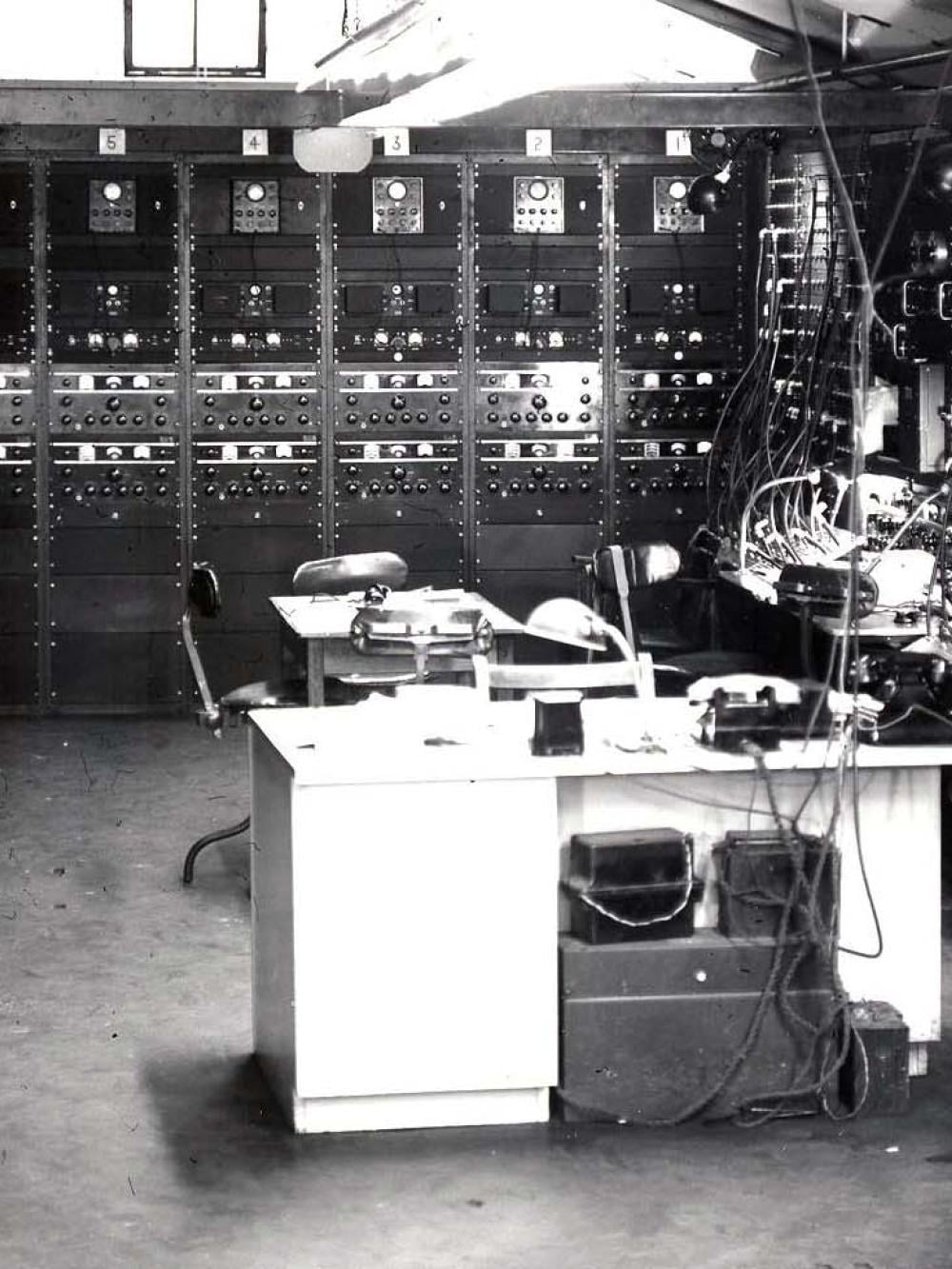
Also, since the spring of 1916, the British had initiated their own interception capability, which later became known as IToc (aye-tok) stations. This development process was rapidly accelerated.
The stations had two missions. The first was to listen to German trench messages transmitted either by telephones or buzzers. Their second role was to police British communications. This latter task was, of course, made easier by any lapses being in English. And it also helped that British telephones were much closer than the German ones.
Because of this work, the IToc teams became unpopular with their frontline comrades. It therefore comes as no surprise that the normal procedure was to offer a friendly warning when a breach of the rules was first detected. But despite continued warnings from above about careless talk on the telephone, serious incidents continued to be detected.
For example, in October 1916 the British began to make preparations to expand significantly the frontage of the Somme offensive. But an artillery officer chatting to friend on the phone gave away the objective and the intended date of the attack. Although poor weather was probably the main influence on the decision, the operation was cancelled.
Eventually it was the disciplinary system that solved the problem. By court martialling offenders the message seems to have got through and by the end of 1916 British soldiers’ behaviour on the telephone seems to have been much improved.
Although it had taken six months to fix their communications security problem, the British were still incredibly lucky that, in the heat of battle, the German signals intelligence team had overlooked their document security.
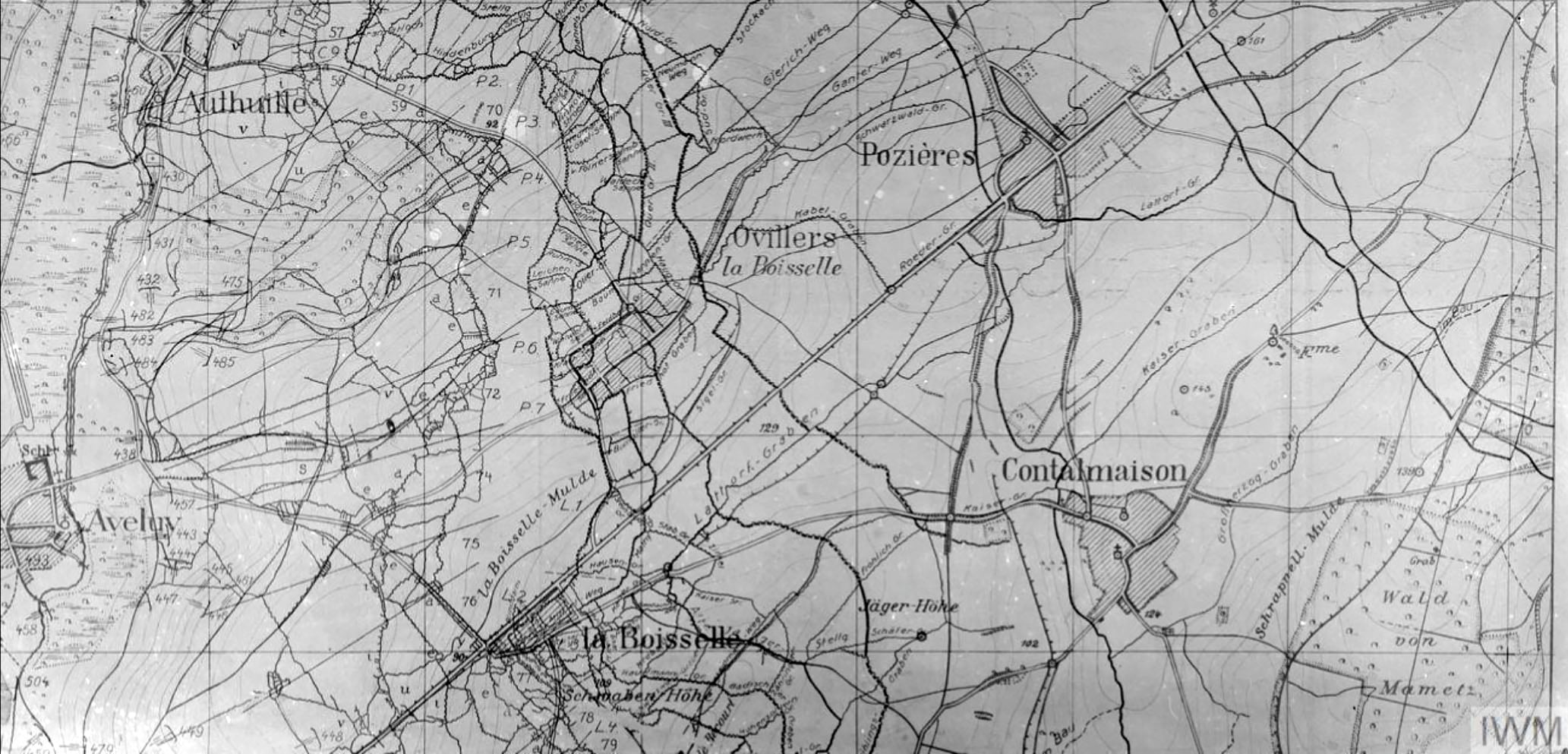 © IWM (Q 65547). Photograph of German Trench Map. Area: Authuille - la Boisselle. Scale 1:5,000. 2.7.16.
Further Reading:
Jim Beach & James Bruce, ‘British Signals Intelligence in the Trenches: Part 1, Listening Sets’, Journal of Intelligence History (forthcoming, open access).