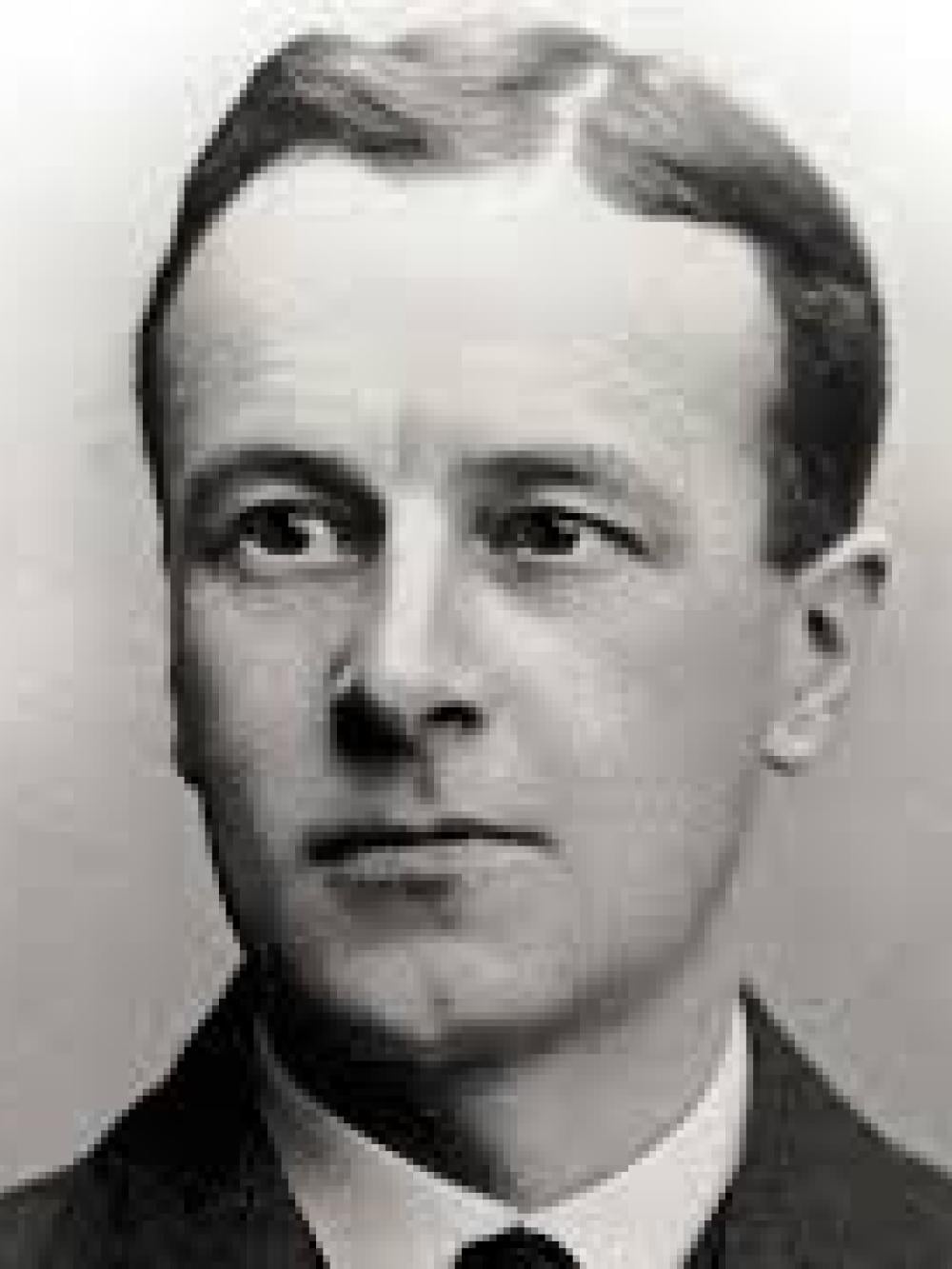
Alan Turing
Alan Turing was a leading cryptanalyst at the Government Code and Cypher School (GC&CS) working at Bletchley during WW2. He is also considered the founding father of theoretical computer science and artificial intelligence

Born 23rd June 1912 in Maida Vale, London. His mother was Chief Engineer at the Madras Railway and his father was a Civil Servant. Turing did well at school and went on to study mathematics at Kings College - Cambridge, where he was awarded a first class honours in 1934. He subsequently went on to obtain his PhD from the Department of Mathematics from Princeton in 1938.
Bletchley Park
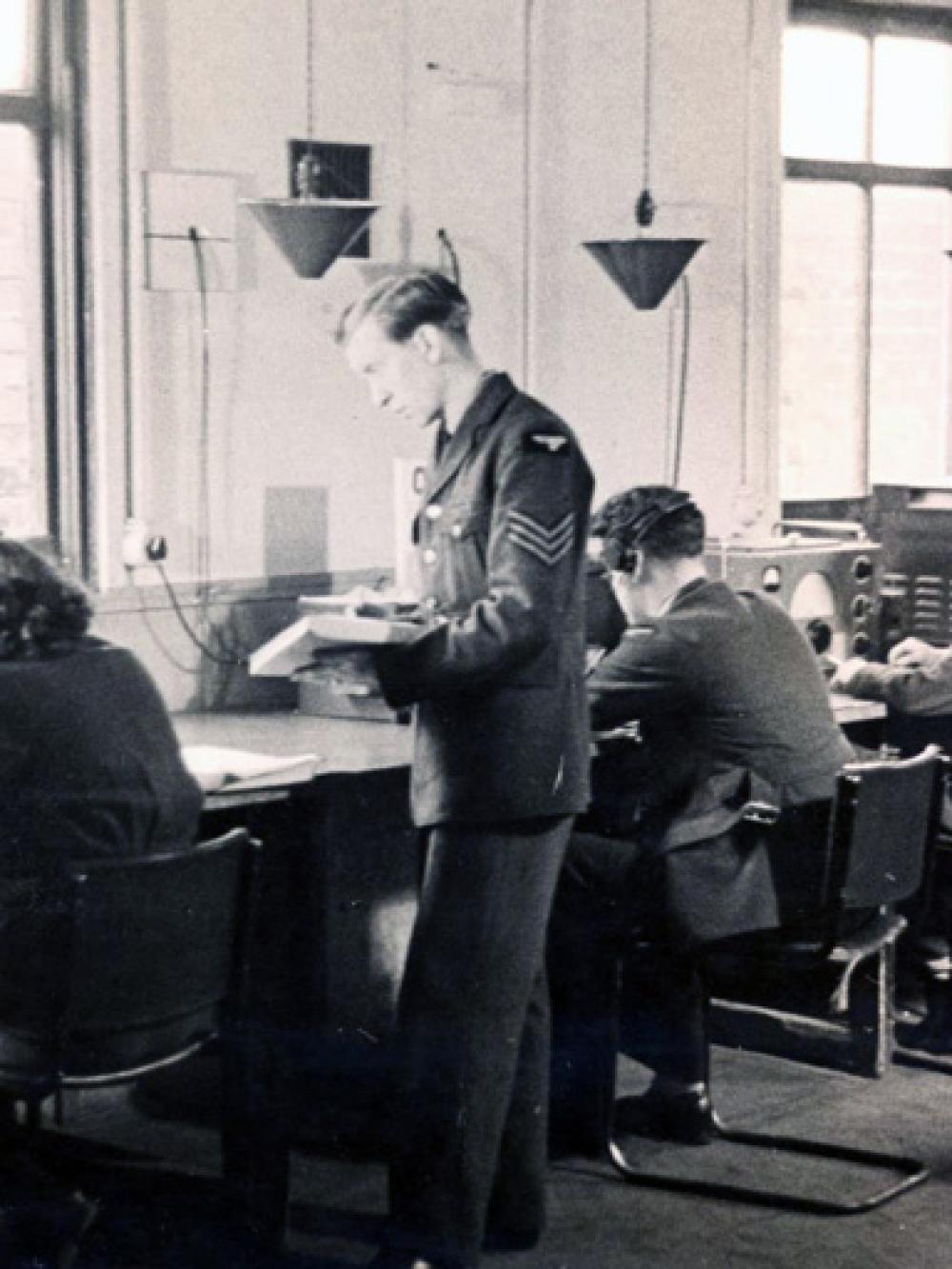
Alan Turing joined the GC&CS – the forerunner to GCHQ - in September 1939 to help with the code-breaking effort during WW2, working alongside Gordon Welchman. Turing was a leading cryptanalyst at Bletchley park, and spearheaded the effort in Hut 8 focusing on the German Naval Enigma, where he worked closely with Joan Clarke.
Turing was inspired by those around him, using their knowledge and initiative as a foundation to develop further. In January 1940, Turing met with Polish counterparts who gave him the insights he needed to design the Bombe. The Bombe was the first special-purpose British cryptanalytic machine and made a major contribution to the exploitation of Enigma. The combination of the Bombe and the brilliant minds and perseverance of those working at Bletchley Park lead to the breaking of Enigma.
After working on Enigma, Turing moved to the US where he worked on investigating secure speech systems and helped with the development of what would become the US cipher machine SIGABA. After his return to the UK in 1943 he developed a portable secure voice scrambler (codenamed Delilah). His skills at finding and exploiting weaknesses in other people’s systems made him best placed to design new secure systems.
After the War
In 1945, Turing moved on to work at the National Physical Laboratory in London. While there, he worked on the ACE (Automatic Computing Engine) which was the first detailed design of a stored-program computer.
In 1948, Turing joined the Mathematics Department at Manchester University. A year later, he became Deputy Director of the Computing Machine Laboratory. Working with Max Newman, he led a team that produced Britain's first general-purpose stored programme computer (the Manchester Mark 1) and then the first commercial computer (the Ferranti Mark 1). In 1950, Turing turned his attention to artificial intelligence and proposed an experiment attempting to define a standard for a machine to be called “intelligent”, this became known as the Turing Test.
In January 1952, Turing was prosecuted for indecency over his relationship with another man in Manchester. During the trial, Hugh Alexander, the Head of Cryptanalysis at GCHQ, was given official approval to go and speak as a character witness on Turing’s behalf, saying in court that he was a national asset. In March 1952, Turing pleaded guilty to the charges and was given a choice between imprisonment and probation; he chose probation which was conditional upon him undergoing hormonal treatment intended to reduce his libido.
On the 8th June 1954, Alan Turing took his own life.
In a speech for the 100 year anniversary of Alan Turing’s birth in 2012, GCHQ’s Director shared the following insights at an event in his honour:
“We can't rewrite the past. We can't wish mid-twentieth century Britain into a different society with different attitudes. We can be glad that we live in a more tolerant age. And we should remember that the cost of intolerance towards Alan Turing was his loss to the nation.”