Director GCHQ's Speech at National Memorial Arboretum Centenary Event
Welcome everyone.
I’m delighted that so many of you could be here today to mark this event.
It’s fitting that we are joined by friends and colleagues from many of the organisations without whom, our successes of the past century would not have been possible.
That includes our partners in the military and intelligence. From Law enforcement, academia and industry.
Some of you have travelled a really long way to be here; I’d like to say a special thanks to our Five Eyes partners who join us from America, Australia, Canada and New Zealand. We’re also honoured to have veterans with us from Bletchley Park and a large number of former colleagues – including many of my predecessors. And of course, I am delighted that many of the people who are still at the heart of GCHQ today are here too – they’re the ones that are going to keep their backs to the cameras. Thank you all for coming.
But it’s not just those in this room who are taking time to reflect on this special occasion. All across GCHQ’s network, at our sites in the UK and with our partners overseas, we’re marking this milestone. We’re looking back at what has been achieved and reflecting on the role we will play in the next chapter of GCHQ’s history.
100 years ago today, at 10am, a small group arrived at Watergate House in London. The day before, they had been working in the War Office and the Admiralty. They were brought together to form a new organisation to carry on the pioneering signals intelligence work they had begun during World War One.
Under Alistair Denniston’s leadership, the newly formed Government Code and Cypher School was tasked with keeping watch on fragile global peace.
We collected intelligence and we focused our efforts on making and breaking codes, and on providing advice to enable others to communicate securely.
Of course, these missions are still an essential part of what we do now as a modern intelligence, cyber and security agency. And, of course, our partnership with the military remains as central and strong today as it was in 1919.
That, together with our origins in World War 1 make the National Memorial Arboretum a fitting backdrop for us today. The Arboretum is home to memorials of past wars and fallen comrades. The monuments you see are a reminder of the sacrifices many have made. But the Arboretum is also a living, growing tribute to those who have served, and continue to serve, our country today.
So, it’s right we’re here.
Historically, organisations like ours are shrouded in secrecy. That’s for good reason. We have to retain the ability to operate in secret to protect our capabilities and our people. That will always be true. But today’s world and our work now demands a more open and transparent approach as we tackle serious cyber, terrorist, criminal, and state threats.
We all know we’re living through a period of accelerated technology change which comes with unique challenges but also huge advantages. These mean that for GCHQ to continue to prosper and particularly, to retain our licence to operate, we have to change too. This is not a new thing for us. Throughout our history brilliant minds have kept us ahead of the curve.
There are many examples.
The most famous remains the amazing work at Bletchley Park during WWII. GCHQ’s work to decrypt German messages, especially those encrypted on Enigma machines, made a significant contribution to the Allied victory.
It also led to technology developments which continue to shape the World today. I don’t think it’s too great a step to say that major innovations, such as the development of COLOSSUS, the world’s first computer, ushered in the information age.
In the 1970s, work at GCHQ by mathematicians Clifford Cox, Malcolm Williamson and James Ellis, described Public Key Encryption for the first time. And well before it was independently invented elsewhere. This technology remains at the heart of internet security today.
And GCHQ’s integrity and tradecraft continues to have major impact wherever I look in GCHQ today.
You have just heard from some of those who work across the breadth of our mission. They are in the frontline, whether that’s defending the nation against cyber incidents - we’ve seen over 1,800 of those since the NCSC stood up - or supporting operations that have led to 19 foiled terrorist plots in the last few years alone.
It’s an amazing record. But I know it’s one we’ve only been able to achieve because of teamwork, both within our own organisation and with our partners.
The military have always been part of that story. From the lessons we learned in World War One that led to the establishment of GC&CS, through to our support in recent conflicts . I’m really proud that over 300 GCHQ personnel were awarded Iraq and Afghanistan campaign medals - this is a partnership that has endured and continues to evolve.
But, this has never been a purely UK or domestic effort. In World War Two, we developed partnerships with intelligence agencies in the US and the other Commonwealth countries. The US were the first to arrive in Bletchley in February 1941, 10 months before Pearl Harbour.
They found an organisation that was bigger in scale than they had imagined and one that had made great inroads into the encryption challenges of the day. What would become the UKUSA agreement was signed in 1946. And in the following ten years, the Canadians, Australians and New Zealanders would become full partners too.
This 5 Eyes relationship goes way beyond sharing of tradecraft, data and intelligence reporting. We share roles in each other’s organisations, work together in all areas of our operations and crucially, we share values which set us apart from our adversaries. It’s a quite extraordinary partnership that plays a pivotal role in global security and stability. And it’s as strong today as it’s ever been.
Of course, we have many friends and allies beyond the 5 Eyes too. The famous breakthrough against Enigma would not have happened without a remarkable meeting in Warsaw in 1939 between British, French and Polish cryptanalysts. Then as now, global problems need global solutions.
And that’s because the challenges we face do not respect or recognise borders; a joined up response is essential. Whether that’s with our allies in Europe or with NATO. Or working closely with MI5 and law enforcement in the UK, with MI6 overseas. And increasingly – driven by our work on cyber security - with industry and academia too.
In every sense, National security is and always will be a team effort.
Now this means that to continue to be world class, we have to keep recruiting and retaining the best people.
We have developed a national network that helps us tap into this talent across the country. Much of this is familiar to many of you. We’re in Cheltenham, London, Bude, and Scarborough. But we’re also now in Manchester, with a new facility opening in the next few months to capitalise on the diversity and vibrancy of that amazing city.
This is part of the reinvention crucial if we want a security and intelligence mission fit for our second century, and if we want to keep inspiring the next generation of brilliant minds to want to join us.
But it’s not just for work inside GCHQ. Increasingly, we’re using our skills and knowledge to cultivate a diverse national pool of cyber security talent. To equip the country with the skills we need to shape our digital future.
Talent alone though is not enough. Our culture must provide space to innovate. Successes of the past have taught us that even seemingly insurmountable problems can be tackled if you bring the right people together and give them space to imagine the impossible.
In 1940, Alistair Denniston wrote to his successor “Jumbo” Travis who would later take over his role as Head at Bletchley. He said:
‘After twenty years’ experience in GC&CS, I think I may say to you that one does not expect to find the rigid discipline of a battleship among the collection of somewhat unusual civilians who form GC&CS. To endeavour to impose it would be a mistake in my mind and would not assist our war effort; we must take them as they are and try to get the best out of them.’
From our inception, we have always valued different perspectives and diversity of thought. No matter what problem we have been charged with solving, we’ve been able to find a way to work together. We strongly believe that with the right mix of minds, anything is possible.
I can’t predict what GCHQ will look like in 100 years’ time, any more than if someone had asked Alistair Denniston back in 1919 to imagine the organisation I head up today. Who we are continues to be shaped by the changing threats and technology around us.
But one thing’s for certain, in the future we will continue to face enormous complexity but that will provide us with enormous opportunity.
Of course, things are hugely different to the situation in 1919. But our values and especially our determination to keep the country safe, remains the same today. And it’s this that gives me confidence that the amazing men and women of GCHQ, working closely with all of our partners, will continue to do everything they can – day and night - to keep pioneering a new form of security in our 2nd Century.
Everyone here and in our extended network – past and present – are part of that success.
And I thank you.
Thanks to all of those past and present who took part in this ceremony today. It’s given us an opportunity to celebrate our past and imagine our future.
Before we bring the formal part of today’s proceedings to an end, the RAF Salon Orchestra will play a piece of music that was popular at Bletchley Park and, rather fittingly for this beautiful venue, it is called ‘Trees’.
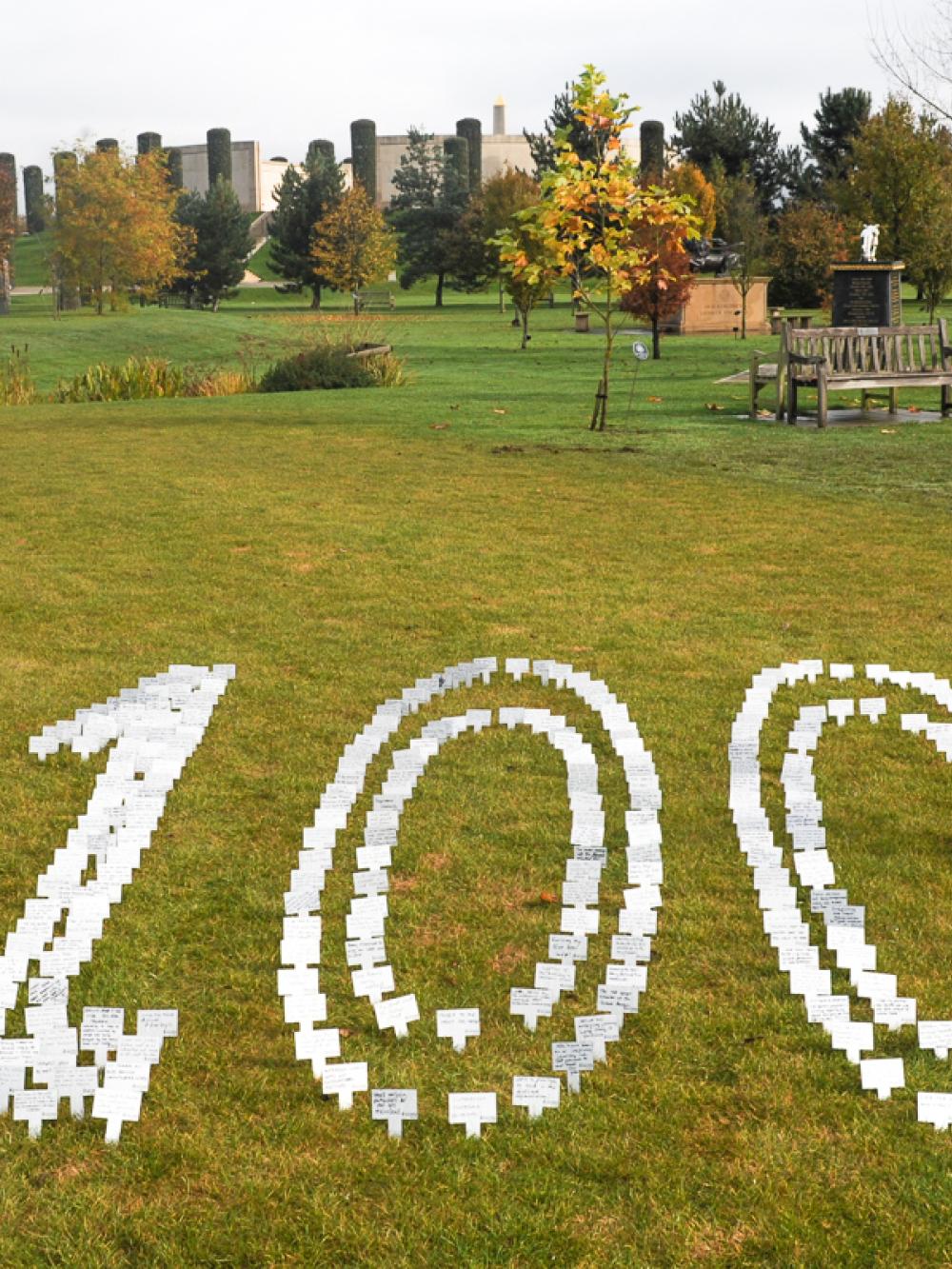
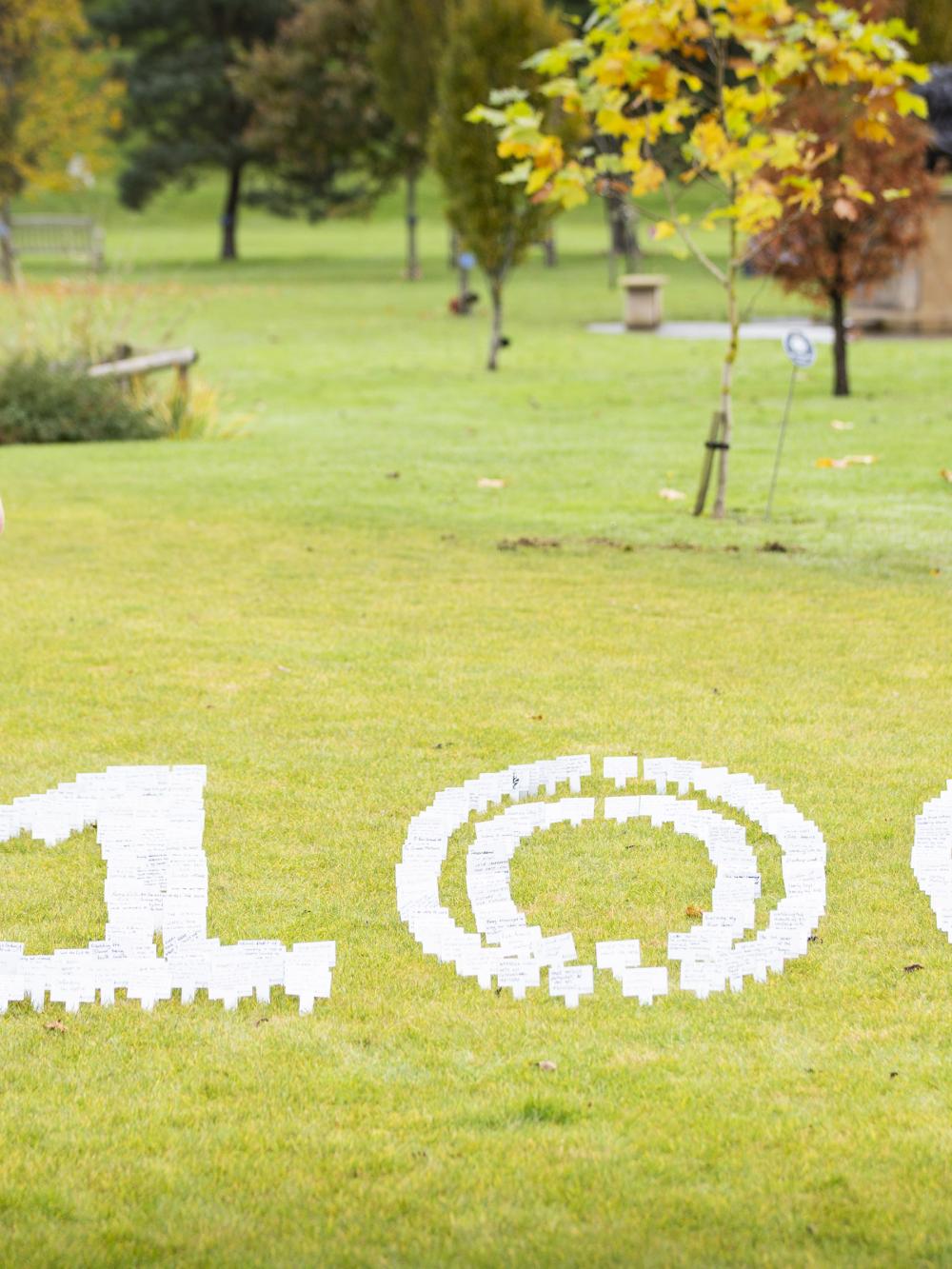
Please take this moment to reflect a bit on on what has led us all to be here today and to imagine what your role might be in GCHQ’s next chapter. You are invited to complete your centenary markers with a reflection of GCHQ or of your hope for the future of our organisation.
As we begin our second century, I am incredibly proud of the people who make up GCHQ today. But each of us is building on the legacy of those who came before. Innovating, improving and reinventing. Long may this continue - here’s to the next one hundred years and those who will take the next steps of the journey with us.