William Francis ‘Nobby’ Clarke
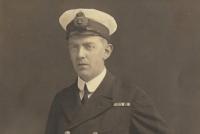
Nobby Clarke was one of the original members of Room 40, the Admiralty’s Cryptanalysis unit during the First World War. He was born on the 22nd May 1883, the son of the Solicitor-General Sir Edward Clarke. He was educated at Harrow School and went on to Magdalen College in Oxford to read Law. He was blessed with an extremely analytic mind, but was held back by his rather outspoken approach.
When war broke out in 1914 Clarke enlisted in the Royal Navy, and in February 1915 he was commissioned as an Assistant Paymaster. At the beginning of 1916 the Director of Naval Intelligence, Captain William Reginald ‘Blinker’ Hall, recruited him into a new cryptanalytic unit in Room 40 of the Admiralty.
At the end of the First World War Clarke compiled the written history of German Naval Warfare in three volumes with Frank Birch. He became one of the founder members of GC&CS when it was established in November 1919, while Birch returned to civilian life. He was the first Head of the GC&CS Naval Section when it was formed in 1924 at which time he was affectionately known to his colleagues as ‘Dr Lion.’ Clarke was one of the
Members of ‘Captain Ridley’s Shooting Party’ of September 1938 which would scope out the use of Bletchley Park as a war station for GC&CS. Nobby Clarke led the GC&CS contingent which included the Air, Naval and Army Service Sections, as well as Dilly Knox’s Enigma team which were allocated rooms on the ground floor of the Bletchley Mansion. GC&CS staff eventually returned to their London offices after the brief war rehearsal at Bletchley. Nobby Clarke was tasked with writing a review report for the use of Bletchley Park if war was to begin. Clarke noted the lack of space at the site, and that the rooms given to the teams during the brief visit, ‘while sufficient for the immediate purpose did not meet the needs of war.’ Clarke was also explicit that new recruits receive adequate training before joining GC&CS.
Once Frank Birch took over as Head of Naval Section German Sub- Section, Clarke was moved first to the Italian Naval Sub-Section in June 1940 and then sidelined to a Naval research and internal co-ordination post once he reached retirement age in mid-1941. Birch, until then only Head of the German Naval Sub-Section, then replaced him as Head of the entire Naval Section. He served from then as the Naval Section Co-ordinator for Neutral Countries through to 1945. He famously described his days at BP as ‘the unhappiest of his life’.
He retired in 1945, and died on the 5th February 1961. Nobby Clarkes papers relating to the setting up of Room 40, his work in the First World War and service with GC&CS between 1922-1945, can be found at the Churchill Archives in Cambridge.