Nigel de Grey
Cryptanalyst in both World Wars, who worked on the Zimmermann telegram
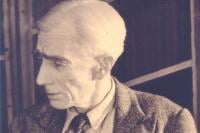
The Old Etonian, Nigel Arthur De Grey, was born on the 27th March 1886 in Copdock, Suffolk, the son of a Rector, and is genuinely one of the greats of British signals intelligence. He became fluent in French and German, and before the outbreak of the First World War he worked for the publisher William Heinemann. He would serve during the First World War in the Royal Naval Volunteer Reserve (RNVR).
Recruited into the Admiralty’s cryptanalytic unit in Room 40 during the war, as a young Naval cryptanalyst he famously broke the Zimmerman Telegram with his colleagues Alfred ‘Dilly’ Knox and William Montgomery. Excitedly, he went into the office of Admiral William ‘Blinker’ Hall, the then Director of the Admiralty's Intelligence Division. ’We had got a skeleton version, sweating with excitement because neither of us doubted the importance of what we had in our hands….As soon as I felt sufficiently secure in our version, even with all its gaps…I ran all the way to [Blinker’s] room…I burst out breathlessly….’do you want to bring America into the war, Sir?’.....I've got a telegram that will bring them in if you give it to them.’ He recognised immediately that potentially it could be the key to bringing the Americans into the war on the Allied side. After the First World War he returned to work for Medici, the company which specialised in high quality art prints.
He was recalled to GC&CS at Bletchley Park in August 1939 and worked in the Naval Section where he made many recommendations for the improvement of the section, following the transfer of its experienced staff to the Admiralty. In April 1941 De Grey was tasked with co-ordinating the formation of the GC&CS ‘Inter-Service Distribution and Reference Section’ (D&R), the title of which was soon changed to the Intelligence Exchange Section (IE). In late August 1941, as Head of IE, de Grey originated a series of reports giving details of the widescale murder of Jews and other civilians in the Western Soviet Union. These reports were sent only to the Head of SIS who then passed them on directly to Winston Churchill.
De Grey became what we might now call Head of Intelligence Production and stayed in this role in GCHQ after the war until he retired in 1951. He spent a year between 1950-51 working in the Historical Section. His work after the war to document the work of Bletchley is archived in the HW43 series of files in the National Archives at Kew.
During his time at Bletchley, de Grey deputised for the Head of GC&CS Travis and was responsible for the key transformational shift in industrialising intelligence production at the site. Apart from the Zimmermann Telegram, de Grey is probably best known nowadays for his prophetic maxim of how a post-Second World War SIGINT service should work: ‘In this brave new world we have got to be prepared to follow trouble around the globe; vultures ready to take wing at the merest indication of corpses.’
He became a Deputy Director at GCHQ, retiring in 1951 and died of a heart attack shortly after.