Brigadier John Tiltman
Wartime codebreaker who went on to play crucial part in developing the UK-US relationship
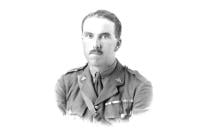
Born in London on the 25th May 1894 and educated at Charterhouse School before he enlisted in the Army at the beginning of the First World War, gaining a Commission with the King's Own Scottish Borderers. He was awarded a Military Cross (MC) for bravery in 1917 and was wounded in France that same year. After the war he served with the White Russians, learning Russian and was first attached to GC&CS in 1920. He was posted to Simla in Northern India in 1921 where he gained experience working on Russian diplomatic cipher systems, returning to GC&CS in London in 1929. During those early years we had two radio intercept stations (civilian manned), one at Cherat in the hills above Peshawar on the Northwest Frontier and one at Pishin in Baluchistan.
Tiltman was to write of his experiences, 'a cryptanalyst should take every opportunity of acquiring a general working knowledge of branches of signal intelligence other than his own. From 1921 to 1929 I was a member of a section of the General Staff at Army Headquarters in Simla, India, consisting of never more than 5 persons. We were employed almost entirely on one task, to read as currently as possible the Russian diplomatic cipher traffic between Moscow, Kabul in Afghanistan, and Tashkent in Turkestan. From about 1925 onwards I found myself very frequently involved in all aspects of the work – directing the interception and encouraging the operators at our intercept stations on the northwest frontier of India, doing all the rudimentary traffic analysis that was necessary, diagnosing the cipher systems when the frequent changes occurred, stripping the long additive keys, recovering the code books, translating the messages, and arguing their significance with the intelligence branch of the General Staff. I realise I was exceptionally lucky to have this opportunity and that very few others have had the chance of acquiring this kind of general working experience. Between 1921 and 1924 I paid 3 visits to the corresponding unit in Baghdad and on several occasions, sitting amongst the operators in the set room of the Baghdad intercept station, worked directly on the red forms fresh off the sets, to the benefit not only of my own experience but also to the morale of the operators.'
He was one of the original Captain Ridley's Shooting Party in 1938, he then founded the Military Section at Bletchley Park and remained its Head throughout WWII. Between the wars, he is best remembered for MASK, the work he led against the Comintern. He was responsible for the first British success against the main Japanese naval code, JN25, shortly after it was introduced in June 1939. And in 1941 he deciphered the message which led eventually to the solution of the German High Command's teleprinter system 'Tunny' by Bill Tutte. In 1943 he was appointed as Chief Cryptographer and promoted to Deputy Director in March 1944. He went on to become the Senior British Liaison Officer at the Army Security Agency in 1949.
In 1938 Tiltman had a desk made for him in Hong Kong which was subsequently in the office of successive Chief Cryptanalysts at GCHQ. It is now on display at GCHQ in Cheltenham.
He was a well-respected leader and was only seen to ever lose his temper once – in 1974, when he read the first disclosures around the work of Bletchley Park during WWII. Tiltman is one of the new non-US nationals on the NSA 'Hall of Honor' where his entry dedicates 'his efforts at training and his attention to all the many facets that make up cryptology inspired the best in all who encountered him.' He played a crucial part in developing relationships with US SIGINT and during his time as the Special Liaison Officer in the USA he helped broker the BRUSA/UKUSA agreement (along with Live Loehnis and Arthur 'Bill' Bonsell).
After eventually retiring from GCHQ as Head of H Division in 1964, he went to work at NSA where he remained until he was 80 and moved to Hawaii where he died on the 10th August 1982.