Captain Eric Nave OBE
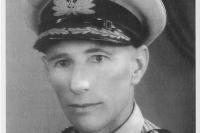
One of the first people to unravel Japanese Naval telegraphy and to break Imperial Japanese Navy ciphers, Captain Eric Nave's success ensured that, in the South West Pacific area, Allied operational forces were able to strike the Japanese Army and Navy whenever opportunities arose. His Japanese linguistic skills, and his almost-instinctive ability for understanding signals intercept, gained him widespread respect within the signals intelligence community before, during, and after World War Two.
Nave was born on the 18th March 1899. In February 1917 he joined the Royal Australian Navy (RAN) and whilst serving with the RAN ship HMAS Tingira in October 1918 Nave pursued studying Japanese (at the time Officers had to demonstrate competence in a foreign language in order for promotion to Sub-Lieutenant. Looking through King’s Regulations he noted those proficient in Japanese received 5 shillings/day extra pay (ten times as much as he would have got if he’d qualified in French or German). Between February 1921 to April 1923 he was based in Japan, quickly learning the Japanese language. Between 1925-1927 Nave served on the Royal Navy’s China Squadron and succeeded in breaking two significant Japanese Naval cipher systems. It was to be the first time Japanese Naval traffic had been intercepted at sea.
In 1928 Nave joined the GC&CS in Britain and was made the Head of the Naval Section – and soon helped decipher a further two Japanese ciphers, one being the Naval Attaché cipher which enabled the British to access communications between Tokyo and its Attaché network in Europe. He then transferred from RAN to the Royal Navy on the 30th August 1930. In 1937 Nave was made Head of the Far East Combined Bureau (FECB) – the GC&CS outpost in Hong Kong.
A few years later, in 1941, Nave became the first Head of the Special Intelligence Bureau (SIB) in Melbourne, later to become the Fleet Radio Unit Melbourne or FRUMEL (the joint British-Australian and American cryptologic group). This was Australia’s first ever Signals Intelligence department. Whilst within SIB Nave helped to decipher the Japanese Submarine Fleet code (JN-4) which was to prove crucial to the war in the Far East. In July 1942 he was to become the first Head of the newly formed Central Bureau signals intelligence organisation in Brisbane. At the end of the Second World War Nave became the Head of the Cipher unit at Defence Signals Bureau (DSB) and in 1946, he led the delegation which ensured Australia's inclusion in the Allied signals intelligence arrangement which became known as the FIVE EYES partnership.
Nave also helped to establish ASIO (Australian Security Intelligence Organisation) in Melbourne, serving with the agency until his retirement in 1959
He was appointed an Officer of the Order of the British Empire (OBE) in the 1972 New Year Honours list. He died on the 23rd June 1993. He has recently been submitted to the NSA Hall of Honor.