Edward Travis
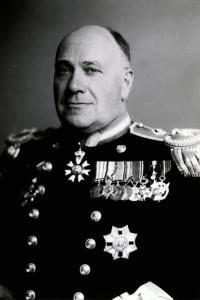
Sir Edward Wilfred Harry Travis KCMG CBE - Known affectionately by his staff as ‘Jumbo,’ partly due to his often heavy handed approach, but possibly due to his rather portly figure, Edward Travis was one of the legendary leadership figures of GC&CS during the Second World War. Above all he was responsible for the rapid transformation of the organisation from a small cryptanalytic unit into an industrial-scale production house for signals intelligence.
Travis was born on the 24th September 1888, and went on to join the Royal Navy in 1906. He was commissioned three years later and on the first day of the First World War he was appointed to the staff of Admiral Lord Jellicoe, as a signals officer.
When GC&CS was formed in 1919, Lt Cdr Travis was appointed Deputy to its Head, Cdr Alastair Denniston overseeing the security of British codes and cipher systems. By October 1938 Denniston gave him responsibility for the three service sections of GC&CS. In November 1939 he was given responsibility for the Enigma decryption teams, taking a room in Hut 8 with Gordon Welchman and Alan Turing. It was Travis that obtained the funding from Whitehall for the production huts and for the construction of the very first Bombe machine.
Under the instruction of British PM Winston Churchill he replaced Denniston as its operational Head in February 1942, reporting to Sir Stewart Menzies, the MI6 Chief. In the latter half of the war, Travis strengthened the leadership and management at Bletchley Park with some inspired appointments, such as Sqn Ldr Eric Jones, who would go on to be a future Director of GCHQ. In 1943 Travis wrote, ‘the peculiarities of the work and the quicksands upon which it is founded…a more formal machine could never adjust itself so readily to the ever-changing needs.’
In June 1944 Travis was knighted for his services. But perhaps his most important legacy was in helping shape the relationship with the USA, developing the foundations for the signing of UKUSA on the 5th March 1946 in Washington DC, which was the basis of the most significant intelligence partnership in the world, that endures to this day.
After the war Travis continued as Director of GCHQ, retiring in April 1952. He died at Pirbright, Surrey on the 18th April 1956.