Major Dennis William Babbage
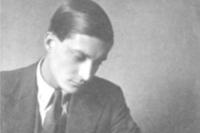
Babbage joined Hut 6 at Bletchley Park from Magdalene College in Cambridge in early 1940. A brilliant mathematician he produced 12 research papers between 1931 and 1938 on algebraic geometry and was awarded a Fellowship in 1936. His Hut 6 colleague Gordon Welchman recalled that Babbage was one of a number of senior mathematicians at Cambridge who were affectionately known as ‘Professor Baker’s tea party’ who met once a week to discuss their research, ‘I remember his skill on the billiard table, particularly with strokes played behind his back; before the war he had repeatedly beaten me at squash and tennis.’
Serving as a Major in the Intelligence Corps, he was regarded as one of the top seven cryptanalysts at Bletchley Park who jointly signed a protest letter to the War Office in August 1940 that the transfer of a German Air Force Enigma task (known as ‘Red’) from the Army intercept station at Chatham to the RAF intercept station at Chicksands would result in a considerable loss of intelligence.
Babbage was the Head of Hut 6 Research Section by early 1943 and went on to become Chief Cryptographer of Hut 6. He worked very closely with Hugh Alexander leading the efforts in the Machine Room. He flew to Paris in April 1945 to inspect a French cipher machine which had fallen into the hands of the Americans.
In 1980 Babbage was made President of his alma mater, Magdalene College in Cambridge. He died on the 9th June 1991.
An oral history of his time at Bletchley can be found at the Imperial War Museum.